Business systems
Software shaped around how your team already works, instead of a package everyone has to work around.
OperationsCRMApprovalsManagement views
We map how your business actually works, then build systems your team will genuinely use — so status, outstanding balances and reports are something you open, not something you ask three people for.
Every outstanding balance comes back to you. Every status update is a phone call. Instructions get given twice because nobody wrote them down the first time, and the person who knows how a process really works keeps it in their head — until the day they leave.
It works. It's just expensive. Not in software licences, but in the hours you spend clarifying things instead of growing the business, and in decisions made late because nobody could put the numbers together in time.
Before software can run a process, someone has to own it. In most businesses three people half-own a task, the boundaries were never drawn, and the real answer to “who handles this” is whoever the director calls that morning.
Put software on top of that and it doesn't fix anything. It records the confusion faster. Approvals stall because two people each assume the other has it. Data goes in twice, or not at all.
So we map the structure before we map the workflow — who owns what, who approves what, where a decision actually gets made. Often that conversation is worth more than the software, because it surfaces things an owner has been working around for years without noticing.
Software gets bought for the management view — the reports, the numbers, the summary screen. So that's what gets designed first, and the people entering the data are handed extra work to feed it.
They do it for a month. Then they do it partly. Then they stop and go back to the spreadsheet that was faster. Six months later the dashboard still loads, and everything on it is fiction.
We build the other way round. The first question is always whether this makes the day easier for the person doing the work. If it doesn't, they won't use it properly — and if they don't use it properly, your reports were never real to begin with.
A dashboard is only as honest as the data underneath it.Which is why we start with the people entering it.
Analysis, system design, automation, integrations and reporting — one working solution, not six separate projects.
Software shaped around how your team already works, instead of a package everyone has to work around.
Repetitive steps connected end to end, so information moves on its own instead of being copied between files.
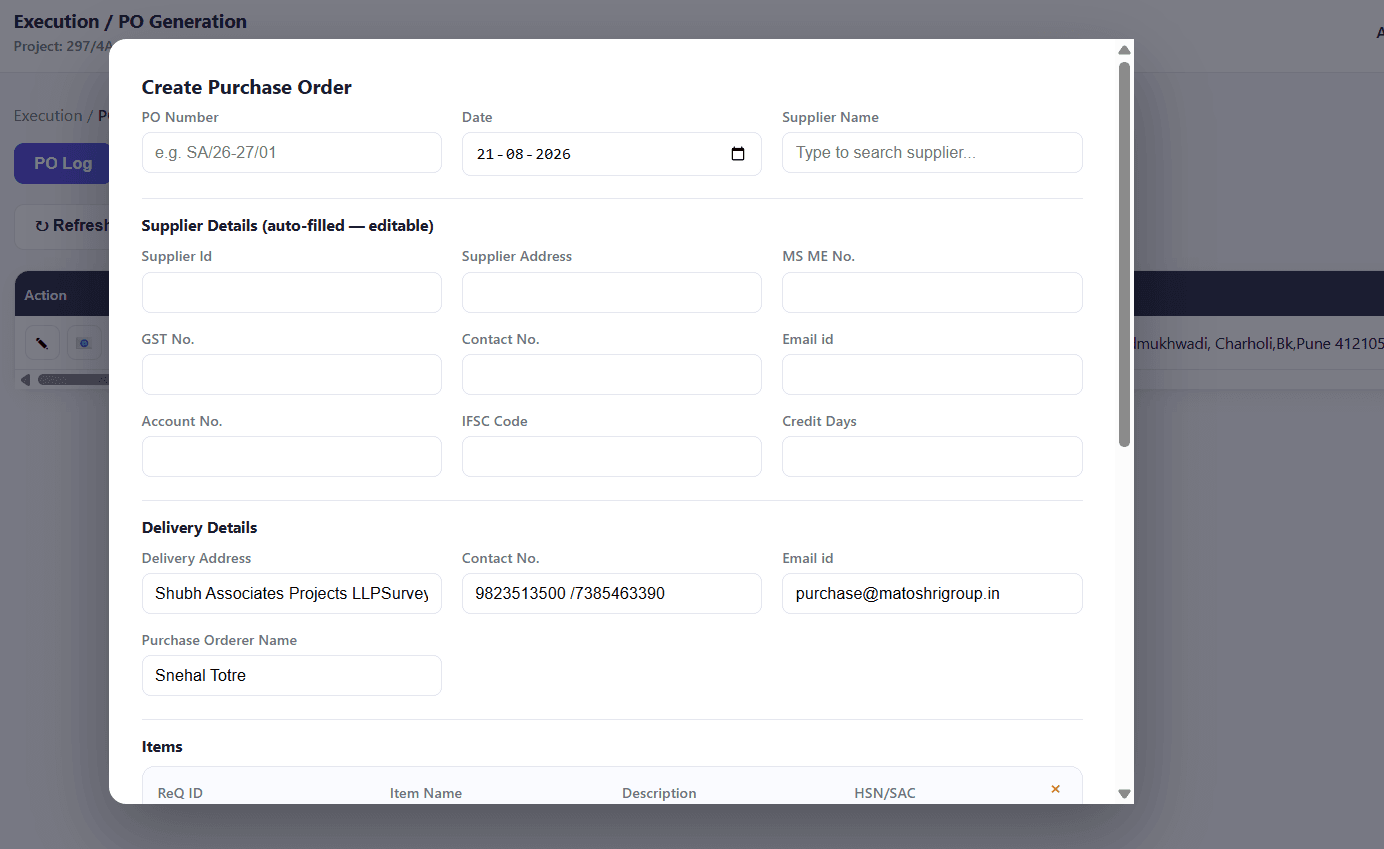
Agreements, notices, purchase orders and reports generated from live data, then sent by email or WhatsApp automatically.
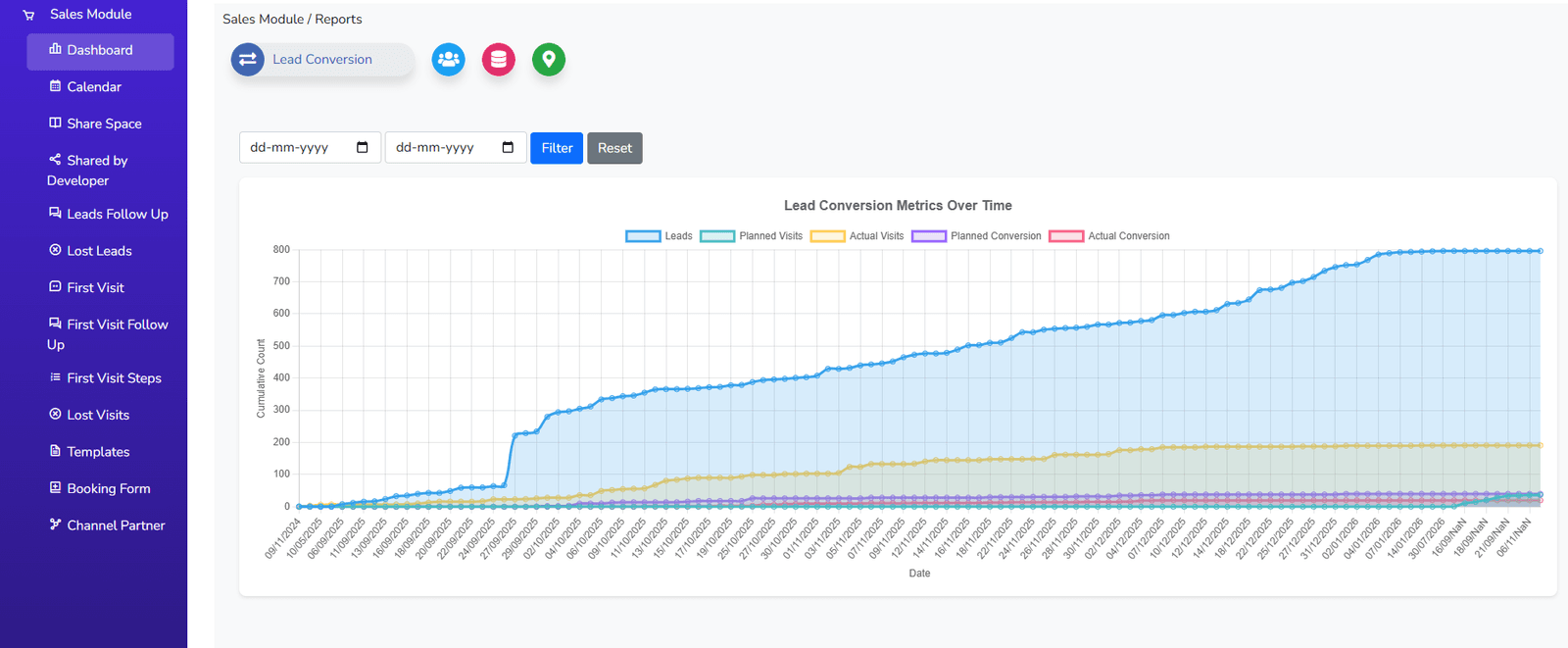
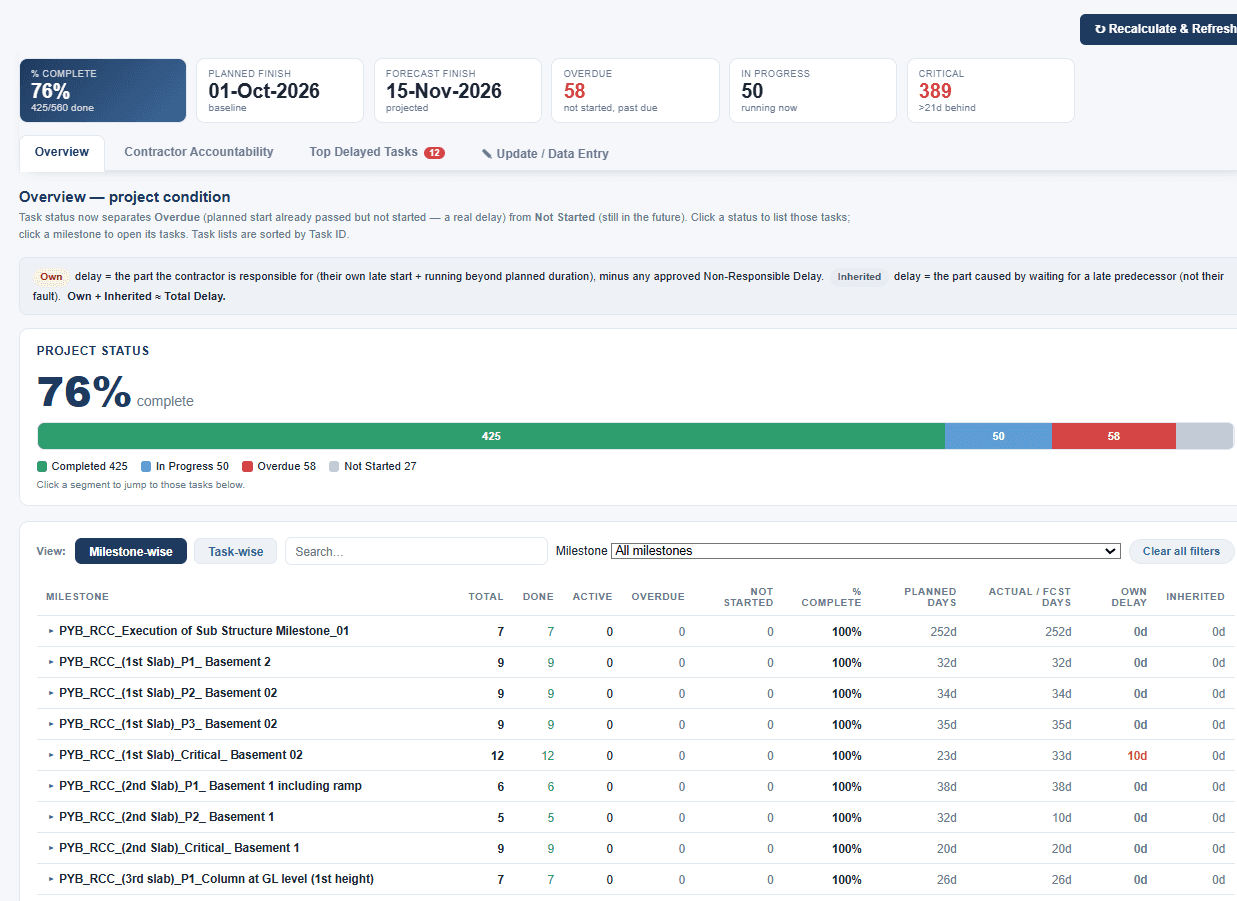
Live KPIs and MIS you can open any day, not a report assembled at month-end.
The tools your team already uses, connected, so nobody has to change how they work overnight.
Sourcing, onboarding and day-to-day HR in one place instead of scattered across sheets and folders.
A fast, well-built website for any business — designed, developed and deployed, with the enquiry form wired to wherever you want the leads to land.
Years of records spread across spreadsheets, consolidated and moved into the new system without losing history.
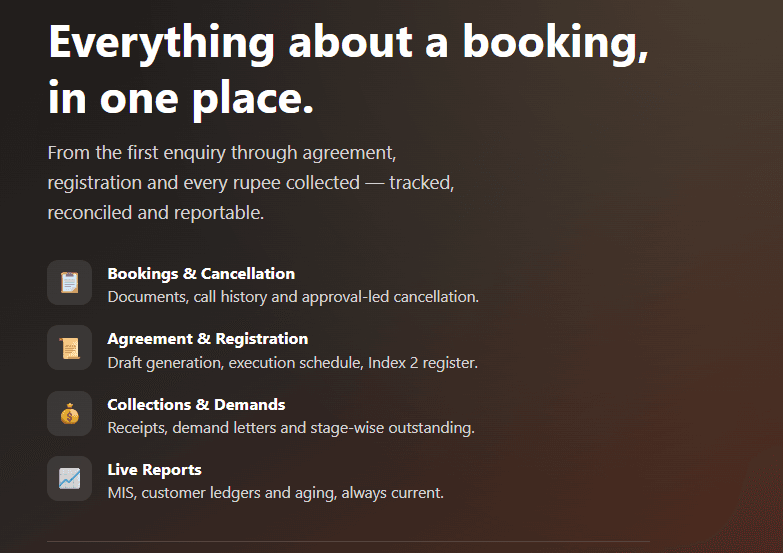
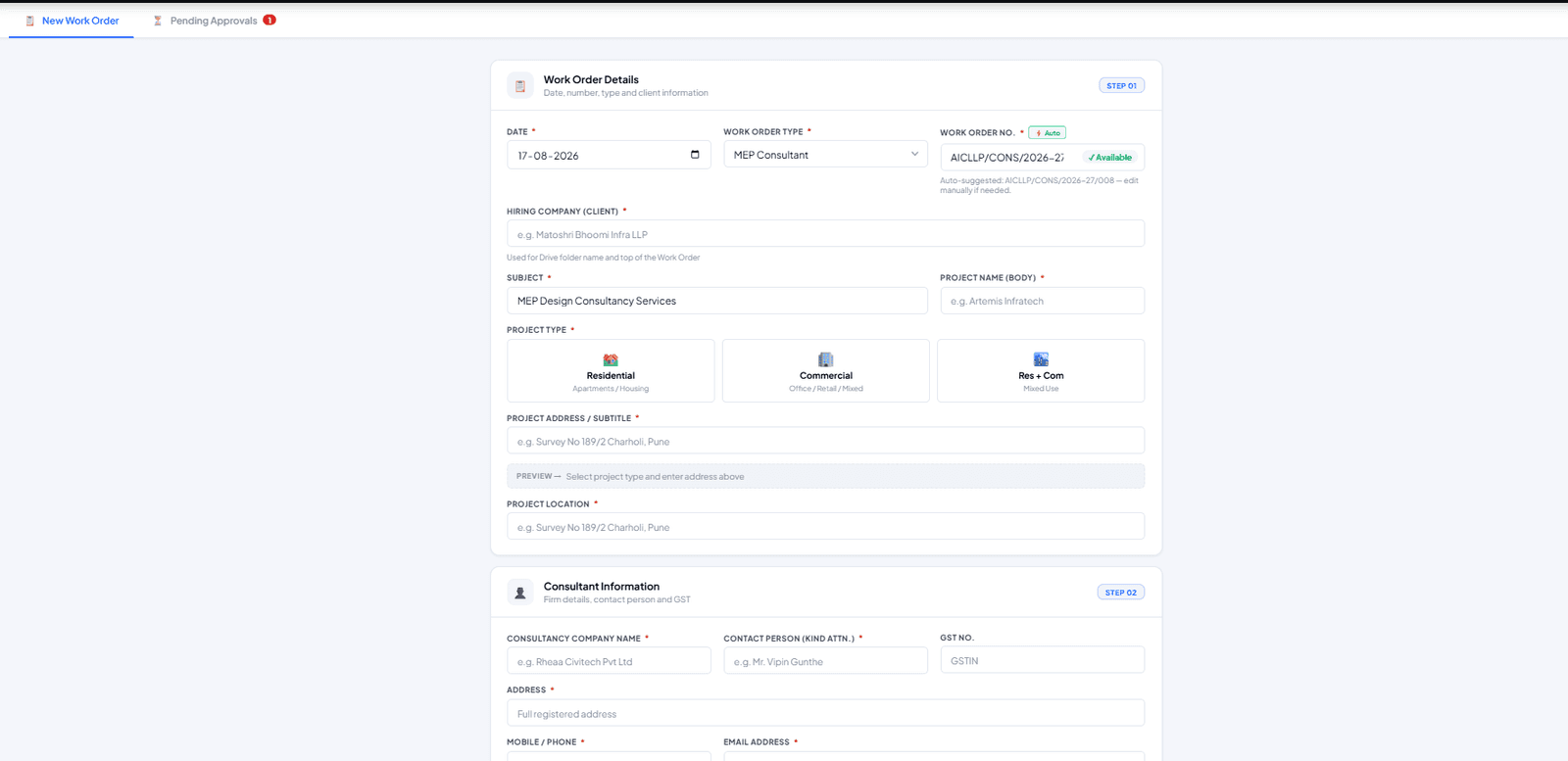
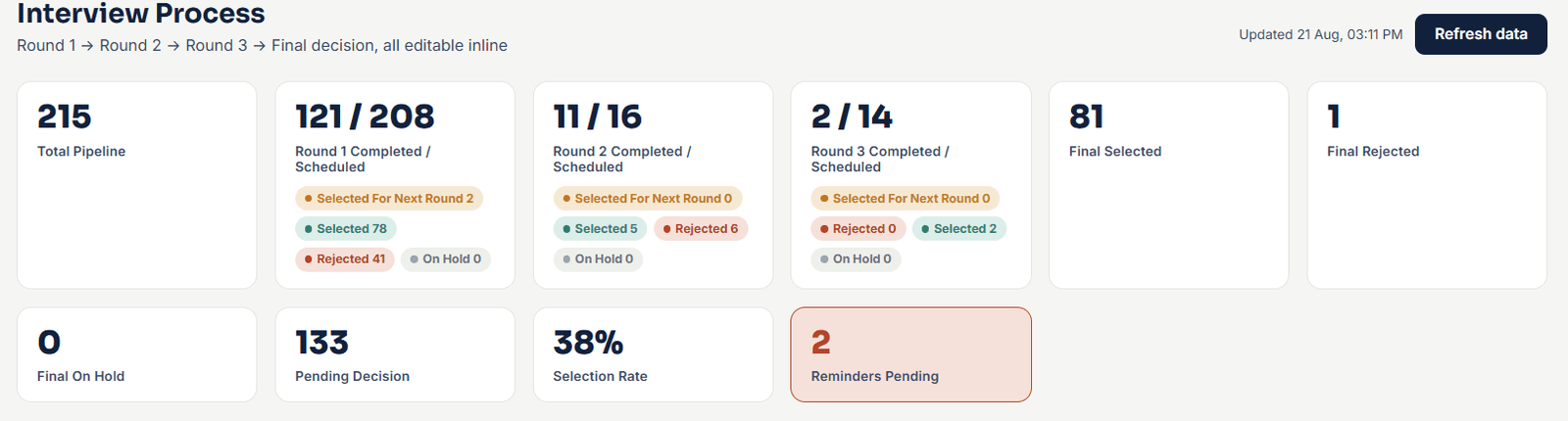
Every screen below is from a system running in a real business. Pick a client to see what was built, what changed, and the screens their team uses.
Between a booking and a signed, collected agreement sat fifteen days of paperwork — demand notices typed by hand, agreements drafted one at a time, and an outstanding balance nobody could state without a manual reconciliation.
We automated the paperwork between those two points. Demand notices and agreements now generate and send themselves, and any customer's full ledger is one click from being viewed or emailed.
It used to take four hours every day just generating documents and mailing customers. Now demand notices and agreements draft and send themselves, collection updates and outstanding are there whenever I want them, and reports are live. Calls have dropped. Any update is one link, on any device. Most important, my team finds it easy and uses it every day. Brand doesn't matter. Results matter.
Real estate, construction and distribution run on completely different processes. The method doesn't change: understand the work first, then build for the people doing it.
Most of the value comes from the first two steps, before anything is built.
Most of the value is in steps 1 and 2. By the time anything gets built, the expensive decisions have already been made — and made with you in the room.

You work directly with the person who designs and builds your system. Not an account manager, not a support queue.
Four years of hands-on work across HR, recruitment, CRM, vendors, contractors, consultants, sales and planning — which is where the pattern behind SystemAutopilot came from. Seeing the same failure repeat in every department made the conclusion hard to avoid.
“I don’t start with the software. I start by understanding how the business works — and who has to live with what I build.”
Tell us what your team does by hand today. We'll map the workflow first, then show you what can realistically be digitised, automated or connected — and what isn't worth touching.
 Scan to save contact
Twenty minutes, no obligation. Tell us what your team does by hand and we'll come back within one working day.